- info@fortunedevelopmentcentre.org
- Toll Free: +263 (026209)2206
- Mon - Fri : 8:00 -1700
CULTURAL HERITAGE
-
CULTURAL HERITAGE
Not all legacies of past generations are “heritage”, rather heritage is a product of selection by society. Cultural heritage includes tangible culture (such as buildings, monuments, landscapes, books, works of art, and artifacts), intangible culture (such as folklore, traditions, language, and knowledge), and natural heritage (including culturally significant landscapes, and biodiversity). Preserved heritage has become an anchor of the global tourism industry, a major contributor of economic value to local communities. This preservation or conservation, is what Fortune Developing Centre is deliberately striving to keep from the past and present for the future generation through promotion of cultural and historical ethnic museums and cultural centres.
Home is a central domain in material culture studies. It cannot be considered solely as a private space which is isolated from the outside world nor as an exclusively public space but as a space in between private and public with strong ties and relations with the outside world. When the MSc students from Stockholm KTH (Royal Institute of Technology) and the Barcelona UPC (Universitat Politècnica de Catalunya) visited Honde Valley in December 2016, they recommended the Chikuhwa Residence as the focal point for their proposed Eco Tourism project. The structures that reflect different cultural origins and the Panoramic view from the homestead into the valley below, could have been of great influence to their decision.
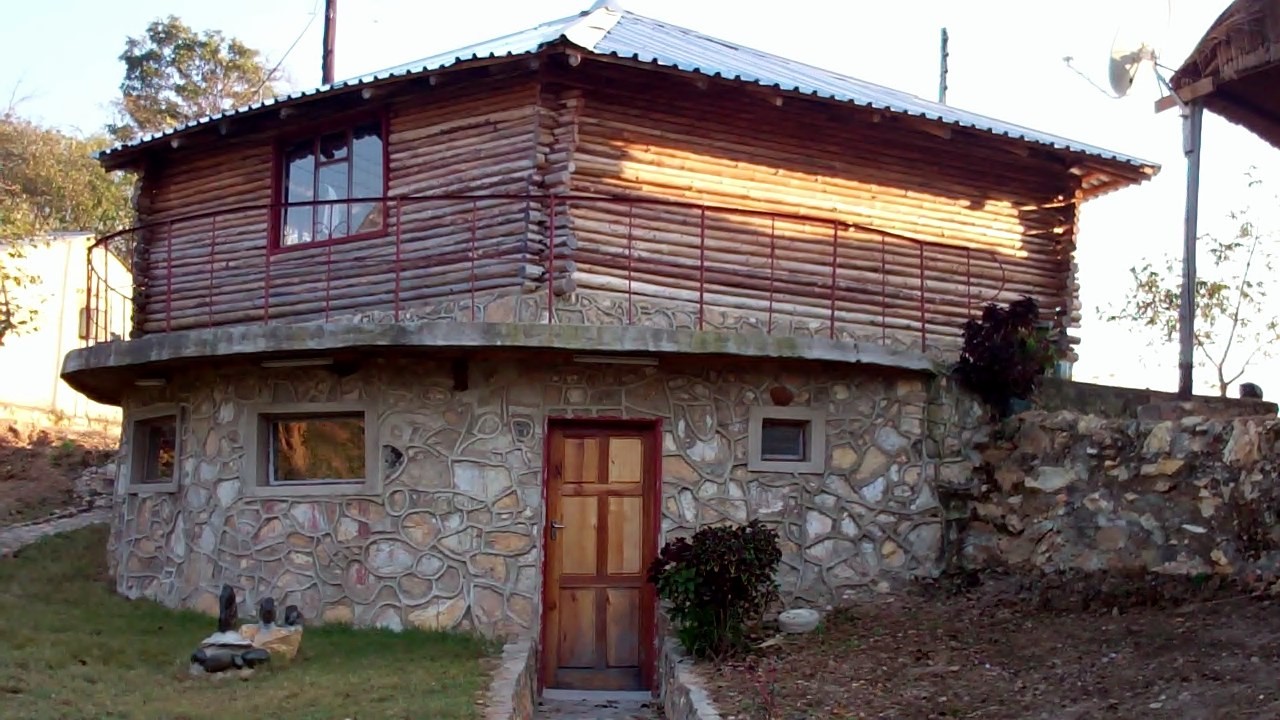
Architectural design
A combination of two cultures:
-
• Great Zimbabwe is a medieval city in the south-eastern hills of Zimbabwe near Lake Mutirikwe and the town of Masvingo. It was built of stone in the Late Iron Age.
- • And handcrafted log houses have been built for centuries in Scandinavia, Russia and Eastern Europe, and were typically built using only an axe and knife.
The Chikuhwa Residence, now called the #Katiro Memorial Centre (KMC), is an embodiment of relics from the past and a gallery displaying artifacts. The allegories of the KMC mostly represent the virtues and feelings, very often rendered as personifications, which animate M’fundisi Wilson Chikuhwa and his wife, Cecilia Ngwaranyi during their missionary work, through which a leadership vision was accomplished. This initiative is destined to raise a permanent monument that celebrates the lives of the couple. From an artistic perspective, the building structures symbolizing Great Zimbabwe and the Scandinavian log cabins and stone statues and household relics that grace the homestead, have been conceived with the aim of creating a new “cultural style” to be replicated in instruction and demonstration of abstract art. Above all, for the realization of the supremacy of artistic expression and teaching of art. The memorial centre would celebrate the legacy of the transfer of knowledge to future generations. Had they known then what we know now and see around us, maybe the couple would have seen 2 million years of human creative living.